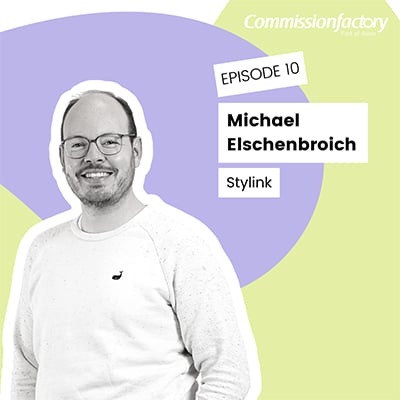
Innovating the Influencer Marketing Model with Michael Elschenbroich, Stylink
You could almost say Michael Elschenbroich was an early iteration of an influencer (before it was a thing) and has been a WordPress blogger since the mid-2000s.
In 2013, he started an agency creating websites and content for monetisation which is where he first encountered Stylink moving over to work for them in 2019.
Stylink was founded in 2017 and has since become one of the largest end-to-end content monetisation platforms worldwide during the past few years. They are an online affiliate influencer platform that connects online shops and content creators. Stylink is empowering more than 130,000 influencers across Germany, Austria, Switzerland, the UK, Ireland, the Netherlands, Belgium, France, and the US, and has recently launched in Australia. Their community has generated more than 14 million shop visits per month and more than 380m EUR (576m AUD) in annual sales.
Michael was recently In Sydney and featured as a guest speaker for Commission Factory’s “Gym and Tonic” event, so Michelle took the chance to talk to him in person about the Stylink story for another Flex Your Hustle Publisher Spotlight.
Find out more about Stylink here: https://www.stylink.com/en
Watch the Episode
Listen Now On


Episode Transcription
Michelle Lomas: Hey there, hustlers. Michelle Lomas here and a very warm welcome to another episode of Flex Your Hustle. This week we'll be spotlighting a brand new publisher to come onto the Australian influencer scene, Stylink. Over the last few years, styling has been taking the world by storm, and they recently bought their Germany-based offering here to Australia.
Michelle Lomas: Stylink's focus is connecting brands to the highly lucrative and engaging micro-influencer community. They currently feature over 2,200 Australian micro-influencers within their network, and it's growing fast. So what makes their offering so unique? Stylink have created an algorithm that allows micro-influencers to be paid based on clicks, but still allows brands to pay on conversion, a model that is fair to all, and allows micro-influencers to reap the benefits of their highly engaged community.
Michelle Lomas: How? I spoke to Michael Elschenbroich, CEO of Stylink to find out more.
Michelle Lomas: Thank you for joining us today. Welcome to Sydney.
Michael Elschenbroich: Thanks for having me here. I'm quite excited to be in Sydney. It was a dream for me to come to Australia. And now I'm sitting here in Sydney in a podcast studio talking about Stylink.
Michael Elschenbroich: So I'm very happy.
Michelle Lomas: Very excited to have you here. Very lucky, actually, all the way from Germany. So congratulations on the launch of Stylink here in Australia. Let's start off maybe diving right into, in your own words, what is Stylink?
Michael Elschenbroich: Yes, we are influencer platform to connect influencers with the brands.
Michael Elschenbroich: We are focusing on the micro-influencers like 5k to 100, 150 K followers on the one side and on the other side. We have all kinds of advertisers from fashion, beauty, interior, travel, and food. At the moment, our biggest platform is Instagram. But we are also on YouTube, Pinterest, and TikTok is the next big thing for us.
Michael Elschenbroich: So we are testing like the last months in Europe, so I can announce that. Also, we are rolling out worldwide on TikTok in the next weeks going live on TikTok. So we are using Stylink on TikTok as well.
Michelle Lomas: Excellent.
Michael Elschenbroich: And of course, We help influences to monetise their content into getting bigger, giving them tips.
Michael Elschenbroich: For example, all the data we have, we share from the market and the other influencers so they can also grow. We have over 150,000 influencers worldwide on the platform, and we have over 2,200 influencers in Australia right now.
Michelle Lomas: So lots of opportunities for influencers. How did Stylink come about?
Michael Elschenbroich: We are looking back in 2017. It's like a long way when you are counting in, on the online market. Maybe you remember it's like the start date of the stories. In 2017.
Michelle Lomas: Doesn't seem like that long ago.
Michael Elschenbroich: Yeah.
Michelle Lomas: Yeah.
Michael Elschenbroich: But it's uh, yeah five years of stories. The idea was to help micro influences to monetise their content.
Michael Elschenbroich: They do anyways. And the smaller ones, of course, influencers are always asked like, where is the skirt, the pants from? They are answering, its per Instagram DM and it's like annoying for them. And so our idea was like, okay, we can help them. It's possible to link something in the stories and so they can link the product or the service, plus they can earn some money.
Michael Elschenbroich: Even if they have no collaboration with a direct brand. So this was the founding idea. And of course our idea was like combining the affiliate marketing like coupons and cashback with the influencer marketing world, creating brand awareness. And we combine the data-driven affiliate marketing with the people-driven influencer marketing.
Michael Elschenbroich: So this was the idea in the end and why we choose micro-influencers? They are strong, authentic ones. They're small, but they have very engaged followers.
Michelle Lomas: Very engaged. So if I was a brand and I had a niche product or I had a niche audience, potentially someone that I really wanted to target, this may be a great solution for me because you have such a large roster of micro-influencers that you can pull together to create a much more tailored buy.
Michael Elschenbroich: Exactly. I will talk maybe later about the algorithm we have for us. The main point is like finding the right influencer with the right followers for each product or for each brand. There are so many different types of influencers we have in our database, so we need to find the best ones for each product.
Michelle Lomas: I've always found actually that the more micro the influencer, the better engagement and conversion actually, because they tend to have a community that's really genuinely been built around them. Rather than a community that potentially with the bigger influencers, has been favored by the algorithm gods, which are hard to crack or driven by celebrity.
Michelle Lomas: It's really smart that you guys have really tapped into that to be able to help brands. Get better results and better sales, but also to support those micro-influencers 'cause they don't get the love that they deserve.
Michael Elschenbroich: Yeah, exactly. So this was also a thing. Our average, what we pay, the influencers, the smaller ones, like per month is about 150, 200 euros.
Michael Elschenbroich: That's like over 200 Australian dollars because they have normal jobs. They're not professional influencers we have. So I was talking about the nurse who having a day job or the night job, and then they do it like in their free time, like for fun. And now they can earn some extra money from us. So it's like we are not the Robin Hoods here, but of course we are giving something back and giving the opportunity, yeah, to give them money.
Michelle Lomas: That's really great. And so if you are a brand and you're listening to this and you're thinking, oh, okay, this sounds really interesting and I've got a few products that might benefit. How do they partner with you and what can they expect?
Michael Elschenbroich: As I mentioned, we have 150,000 micro-influencers. We talked in different interests, needs, tendencies worldwide. I talked already, we have a unique algorithm, find the right influencers for each brand.
Michelle Lomas: And how does that work? So what's so special about your algorithm? Don't tell us the secret sauce though. If competitors are listening, we don't wanna tell them what's going on.
Michelle Lomas: But yeah. What's so special about the algorithm?
Michael Elschenbroich: The first thing is like we are paying a CPC basis on the influencers and getting a CPA on the brand basis. So that's like a unique thing in the world. So we have some competitors, mostly in the US are working on the CPA basis, with the maths very easy, where like you can share to the influencers, but we pay on clicks.
Michelle Lomas: That seems very fair for the influencers because often what they do is driving an action to the site, but they can't always control that final end product and how people purchase. 'Cause there are so many other influencers. It's price, it's quality, it's all those things. So that seems really fair.
Michael Elschenbroich: Thank you for the argument.
Michael Elschenbroich: It's the same thing, what I always say, like the influencer can't do when the credit card from the followers are not working.
Michelle Lomas: Oh, so true. When they leave it in their cart and forget about it.
Michael Elschenbroich: Yeah, exactly. So this like a fair one. What's also like the algorithm is counting a lot of things.
Michael Elschenbroich: Of course. It's, the conversion is counting the links, clicks the amounts of links and some secret stuff, of course. And the CPC, like the click prices from each brand, each day differs per influencer. So we want to find, like I said before, the right influencer with the right followers for each brand. Maybe one influencer have Lululemon on the highest sense per click per day, and it differs from day to day.
Michael Elschenbroich: So the algorithm is calculating in the night, it's like a bidding engine.
Michelle Lomas: And so how does that work for a brand? Do they have a set CPA that they agree to or does differ day to day?
Michael Elschenbroich: No. With the brand, we have the same CPA, normally starting from 10 to 15% for our content side, and we have to choose the right influencer.
Michael Elschenbroich: So we are paying in cents, so you can't do the math.
Michelle Lomas: I guess the question I have, and I'm sure a lot of brands will have too, is how are you different to your competitors?
Michael Elschenbroich: Yeah, I think what I already told is like the CPC, we know only one company in the world who is doing that also, but not have an algorithm with changing the CPC every day.
Michael Elschenbroich: So this is worldwide unique model what we have there. Also, like we are in 13 countries and we have 26 nations working at Stylink. So our thing is, we want to be native, we want to be as close on the market side as we can be. We all based in Munster, Germany at the moment, so it was as a decision to make. We are, the growth was so fast and so heavy.
Michael Elschenbroich: Company values are very important for us, so we thought it's better to wrap all of the employees in one city in the meantime, in two offices in Munster because we are going too fast. So we can give them the values from Stylink and what we want to achieve. But what I can say is from October on, we will have the first person outside of Europe working and it's in Sydney, Australia.
Michelle Lomas: Yeah. Wonderful.
Michael Elschenbroich: So yeah, we have 24 7 support. It's very important for us talking and supporting all the influencers. They had so many questions, but it's very important for us looking after every market we have. So we have country managers and campaign managers for each country in Germany sitting next to each other and working closely together.
Michelle Lomas: Yeah, wonderful. And so I guess there's a couple of benefits there. Definitely. It sounds, like there's some brands out there who are looking to scale globally and get that global reach. Your team on the ground all in one place, that's a really great benefit because they can connect to each market so much quicker.
Michael Elschenbroich: Exactly.
Michael Elschenbroich: That was one reason why we expand so fast. We learned some brands are in some markets, but we have some brands expanding also in the markets we are in. Not all brands are in all markets right now, but also we help them with our influencers. It's good in Europe or it's good in Australia and then we helping them worldwide.
Michelle Lomas: Yeah, it's great. We have some really incredible success stories here in Australia within so many categories, particularly at the health and wellness and the beauty categories just booming overseas. So it's good to hear you guys have such a good support network and you can help our lovely little brands scale to Global Heights.
Michelle Lomas: We always love to see an Aussie brand doing well overseas. And I guess the one thing you missed is that you do really support these micro influencers. And so if a brand is coming to work with you, I would say that they would have that comfort and knowledge knowing they've made the right choice, and it's a company that isn't exploiting influencers and what they do either, but really protecting them and helping them grow, which is nice.
Michael Elschenbroich: We do whatever we can.
Michelle Lomas: All right. You've been here in Oz, as I mentioned. You're doing some big launches here, meeting some influencers, et cetera, and you've been here for a couple of months, launched in Australia. What's your thoughts about the market? What are you seeing?
Michael Elschenbroich: We started in April. Maybe the fun fact is why we started in Australia.
Michael Elschenbroich: We have so many requests from Australia and the reason is we are very big in the UK and there are so many connections with influencers and followers from the Australia to the UK. So we are asked so often, and so we decided at the end of last year that we came to Australia. Actually Commission Factory was the first one we talked to ever in Australia. So we see in the Australian market, it's a little bit different than the European. I think the influencer marketing in combination with the affiliate marketing is a little bit newer here in Australia than in Europe or in US. So have a lot of talks with the brands, how we do things.
Michelle Lomas: Okay, so if I'm a brand looking to sign on, all sounds really good. What's the process look like?
Michael Elschenbroich: So we have a partnership development team who's managing all advertiser accounts, the new ones and the old ones. First of all, the advertisers must have a relationship with an affiliate network, like Commission Factory. Then we talk about possibilities and opportunities with the brand, what we can do, we love to talk directly to the brand, not only to the account manager from the AT networks. And we are very open for suggestions and wishes at any time. So we have three products, they're always on, like the affiliate marketing thing, the campaigns we have and the pop up, and the integration is free with no such integration fees.
Michael Elschenbroich: We have APIs to the network, so it's very easy for us to connect with Commission Factory. So it's like maybe now our work for our IT team to integrate the new brand. The only thing is deep linking must be possible, linking all the product or services from the webpage and not only the homepage. This is important for us because we want to be authentic.
Michael Elschenbroich: We have some promotions like iMessage, WhatsApp newsletters, and the classic email newsletters to help the influencers getting also influenced by us, new collections or something like that. But we want to be authentic so they can choose everything. It can be the new collection or the older collection.
Michael Elschenbroich: This is our model, not only promoting what the brand wants. Yeah, it's authentic because the influencer can choose.
Michelle Lomas: Great. It's great that the influencer is the one selecting it, rather than you saying you have to do this or you have to do that, 'cause it must obviously fit within their style and their audience and be authentic.
Michael Elschenbroich: Yes.
Michelle Lomas: I wanted to end asking you a bit more of a trends question. You're really obviously in the space. What do you think the future of influencer marketing looks like?
Michael Elschenbroich: Yeah, I think it's an interesting question. I think it's getting bigger, and I'm not always saying that because I'm working in the influencer marketing space.
Michael Elschenbroich: I think in the future, building communities is a big topic. Independently from the giant data collecting machines like Google or Meta, I think we are losing tracking opportunities and browsers, Facebook, Instagram, because of the data protection. And we learned like in the past I'm always talking about the content is king and the targeted content is King Kong.
Michael Elschenbroich: So we need the perfect content to the right audience when they are losing the knowledge about target groups. We need new ways and I think the influencer communities they build with their followers are the best ones. So I think it's getting more interesting because yeah, I think in a few years we are cookie free.
Michelle Lomas: So they say seems rather delayed, doesn't it?
Michael Elschenbroich: Exactly. But I think one point, some point of no return in the future. Yeah. Yeah. So our goal must be looking for influencers with the right target groups for each brand. And that's what we are doing.
Michelle Lomas: And do you think TikTok's gonna have an influence?
Michael Elschenbroich: Yeah, I think it's right now, so this is the reason we are working so hard for that.
Michael Elschenbroich: Also some tracking problems we had in the past with TikTok, but it's getting bigger. It's like we started two years with our plans with TikTok and of course there was a young society there about 14 years old, not so much money. I can tell you they are clicking so heavily. That's our problem. It's all, and they're not buying so much.
Michael Elschenbroich: And for our business model, that's not the quite good audience. And it's also interesting on Instagram, they're not clicking on the bio, on the profiles, but on Instagram, they are clicking so much on the stories.
Michelle Lomas: That's so interesting. But they're not buying, they're just browsing.
Michael Elschenbroich: Yeah. And of course, some technical problems about TikTok.
Michael Elschenbroich: You're not getting out of the in-app browser from TikTok. Of course you set the cookie in the in-app browser when you're buying later. We don't see the sale, now we found some work around to do that. So of course we're also looking after new cookies and cookie list tracking also. Cause you are not buying that stuff when you are looking on the Insta story or TikToks you're buying later maybe on your laptop or another phone or mobile phone or tablet. So it's also a big thing for us.
Michelle Lomas: Great. Michael, thank you for joining us today. I'm glad we could do this in person. It's always nice. I hope things go well with the rest of your stay here and obviously the launch and it's really exciting to hear what you guys are doing and excited that this is cracked the Australian market and is now much more accessible for Aussie brands.
Michelle Lomas: So thank you very much and thank you for supporting micro-influencers. They need the love I think.
Michael Elschenbroich: Yeah, thanks for having me. And this was a pleasure to be here.
Michelle Lomas: How great is it to hear from companies who are championing the little guys and making it easier and fairer for everyone to benefit from micro-influencer marketing?
Michelle Lomas: So what did you think of this episode? Let us know by leaving us a review and don't forget to give us a rating. And if you're interested to learn more about Stylink and how you can benefit, head to stylink.com that's S T Y L I N K.com or speak to Commission Factory. Next episode, we have another great hustle story coming your way.
Michelle Lomas: This has been Flex Your Hustle, A show brought to you by Commission Factory and produced by Ampel. I'm Michelle Lomas, bye for now and keep hustling.